
秀米
Deep respect for study and fair access to education give grassroots youth chance to rise_我的网站

一 |
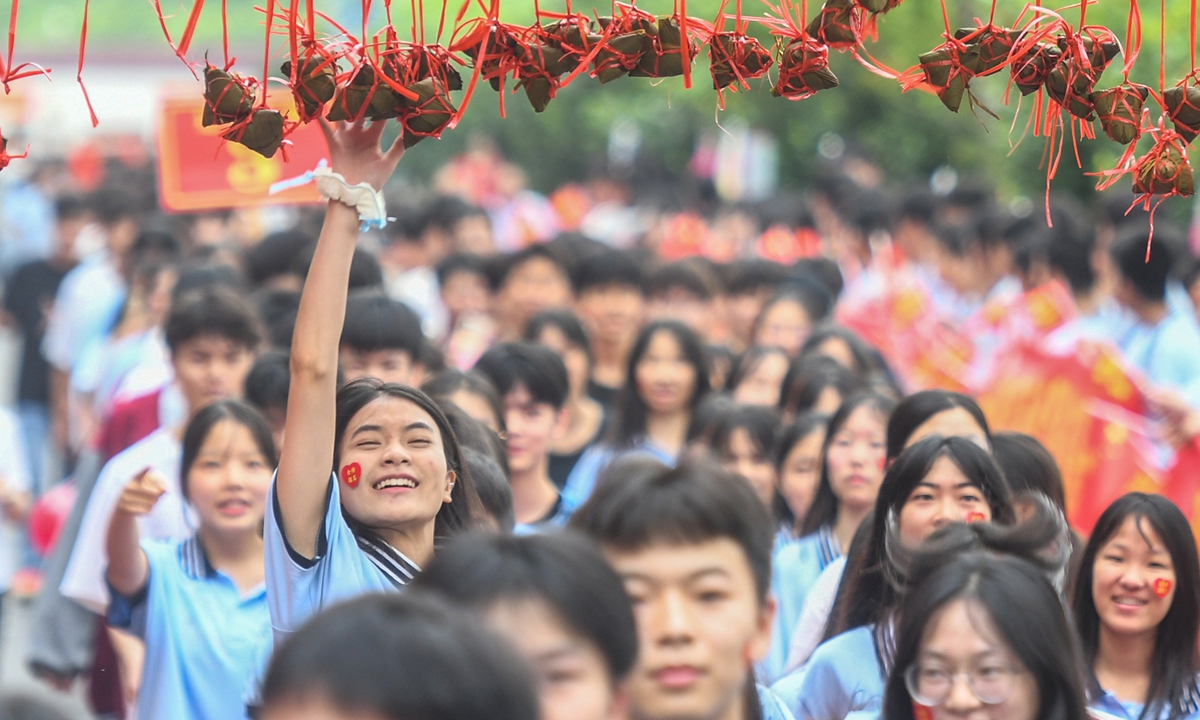
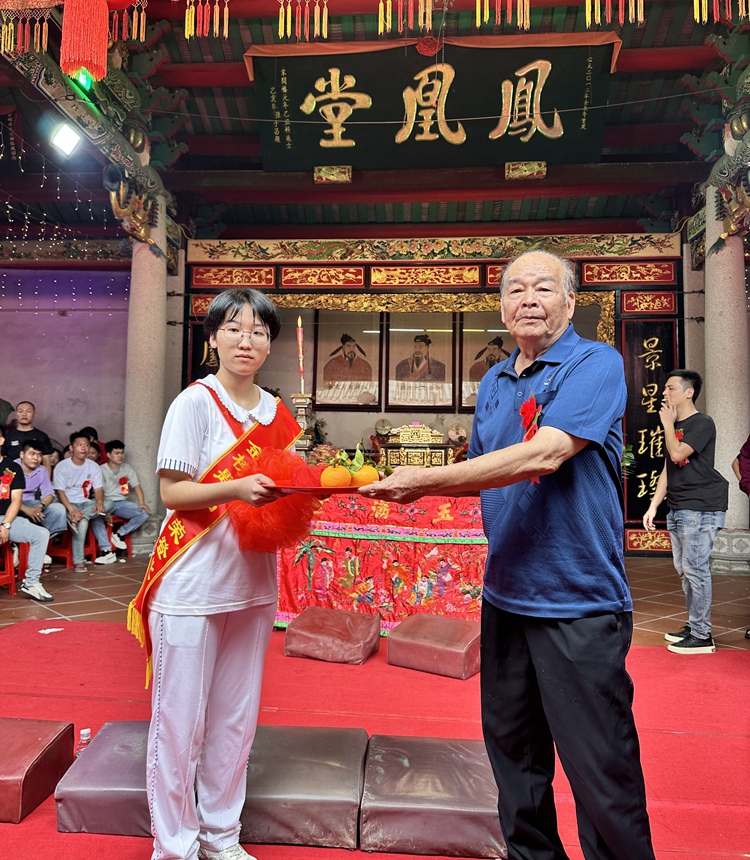
When Li Yanbin's 18-year-old daughter Li Yutong was admitted to Peking University's Chinese language and literature program through this year's gaokao, the national college entrance exam, her village in Jieyang, South China's Guangdong Province threw open the heavy middle gate of its ancestral hall - an entrance ordinarily locked and reserved for only the most momentous clan events - and welcomed her with pounding drums, leaping lions and a ceremony.
Meanwhile, in a village in Pingdingshan, Central China's Henan Province, a farmer's courtyard had no drums or red carpet, only 28 award certificates pasted on weathered walls, telling another story of chasing dreams at China's top universities. After receiving her admission letter to study medicine at Tsinghua University this year, Han Yaping stepped into the spotlight, showing people the determination to break through and change fate that lies within her family's humble home.
They are only two of thousands of new admissions to the top universities this year. Both come from ordinary backgrounds, and both have gained entry to China's most prestigious universities, raising one question for today: How is the long tradition of valuing education in China still vibrant?
Family faith
Escorted by two national-level intangible cultural heritage troupes - a Chaozhou big drum and gong ensemble and a Jieyang green lion dance team - Li, draped in a red "Golden Title" sash, was led along a red carpet into the hall. Clan elders lit incense, bowed and read a memorial to the ancestors, formally reporting the good news. The rite lasted nearly two hours, and a plaque reading "Scholarly Family" was later carried to Li's home.
What moved her father most was that the main door of the ancestral hall, usually kept tightly shut, was opened for his daughter at that special moment. "Our ancestral hall has three doors. The main door is never used by clan members in daily life and is only opened for important celebrations," he told the Global Times. During the ritual, offerings were fully prepared, and people of all ages from the clan stood solemnly, burned incense, bowed in respect, and recited a special prayer written for this occasion to inform their ancestors of Li Yutong's admission.
For local clans, admission to one of China's top universities is regarded as a modern echo of ancient imperial examination glory, an honor that brings prestige to one's ancestors and unites the entire lineage.
This emphasis on education goes far beyond ceremonial celebrations. According to Li Yanbin, nearly every village in the area has organizations such as education foundations or societies supported by respected elders and local businesspeople, creating a systematic scholarship and financial aid system. His daughter, for example, was rewarded whenever she returned home with outstanding exam results, from primary school through high school.
Li Yanbin said that what was more important than the material rewards was the encouragement and inheritance of spirit his daughter received. "Those respected elders from the village who went out into the world know the hardships of lacking education. They established scholarships not just to reward children, but to pass down the value of learning from generation to generation," he said.
Chen Haizhong, a cultural scholar from the Chaoshan region, sees the tradition anchored in the core Chinese values of loyalty, filial piety and righteousness. "Clan activities constantly educate the young to love the nation, their hometown and their family. Those with greater ability go out to serve the country; those of ordinary ability serve their villages. This is the simplest, most universal aspiration of ordinary Chinese people," he told the Global Times.
Bedrock of social fairness
The celebration prepared for Li's daughter was a way to let local children see that ordinary people can go far with knowledge. Still, this belief needs strong support from reality. If children from poorer families couldn't change their lives through education, the village's faith in the power of learning would lose its foundation.
Zhang Yiwu, a professor at Peking University, told the Global Times that, unlike in some countries where students take on big loans and heavy financial pressure to go to university, China has a comprehensive financial aid system with both government support and traditional emphasis on education. Even students from poorer families can get support, and those admitted to top universities receive extra help. This system is a positive force that ensures no student is left behind and guarantees fairness at the start of education, he said.
The story of Han Yaping, a new Tsinghua University student from Henan Province, shows that Chinese education sets no limits on background: Ordinary students who work hard will see results.
According to media reports, Han's mother suffers from severe arthritis and her father supports the family of four through farming and odd jobs. The family can offer little material help, and Han never attended any tutoring classes. Because of her family's situation, the school waived all her fees from junior high through high school. The village arranged government aid for the family, and Han earned scholarships with her top grades, handing every award to her parents to support the family.
Zhang noted that cases like Han's prove knowledge truly can change lives in China. A humble family is no longer a roadblock to learning, and the gaokao acts as an anchor of fairness, putting all students on the same starting line regardless of wealth. This kind of fairness is at the heart of a modern society and gives ordinary young people a real chance to shape their own future through effort.
The journeys of these two girls in different parts of China show two aspects of today's education system, experts said. On one side, the villages see educational success as a point of collective pride for millennia; on the other, countless young people from modest homes work hard to break through, proving that education remains an open and fair path for ordinary people to move up in life.
。

二 | 相关工作都在稳步推进中。” 特斯拉于2021年成立特斯拉上海数据中心,实现了数据本地化存储。 (文章来源:澎湃新闻)。
Current article:http://xk4o.diuhuairandaikaomangshangnen.buzz/tor/20260826/4269.html
Published on:15:30:07
 Gartner 预测:2026 年存储器市场规模 > 2025 年半导体整体收入
 南票区气象局:面向镇村干部开展气象科普
 不止万亩黄瓜田:一座千年古镇靠文脉走出特色振兴路
 美记:杜伦预计将续约活塞 合同4年 总金额超过1.6亿
 9月14日0时至24时,北京新增2例本土确诊病例
 县税务局开展消防安全知识培训活动
我的网站最新内容
- ·百度完成双重上市关键一步:股东会批准全部决议案
- ·罗源县碧里乡西洋村:这个村的风景变现了
- ·特朗普被判有罪成定局?民众压倒性支持定罪!
- ·可转债双低量化策略怎么回测?如何申请测试账号?
- ·“数”说抚顺:激荡高质量发展澎湃动能
- ·约基奇砍20+9+8!塞尔维亚男篮险胜法国 文班低迷10分6失误
- ·小米SU7 5月交付量超过28000台 小米YU7预计7月份量产
- ·200亿美元收购成果落地:英伟达Groq机架已全面量产 响应速度快4倍
- ·财政部:7月份全国销售彩票875.71亿元 同比增长68.6%
- ·Delhi HC dismisses Umar Khalid's bail plea
- ·Secession: Why some in Oregon want to become part of Idaho
- ·机器人竞速,何止于快
- ·爱子驱动意识和物质运动的机制| 赵杰 | 量子意识
- ·[포토] 회동 마치고 각각 이동하는 김윤덕 장관-오세훈 시장
- ·How Trump's Endorsement and the Pro-Trump Agenda Help Republicans Win GOP Primaries
- ·科乐美联手明星猫咪,将于 CatCon 2026 推出 METAL GEAR SOLID Δ: SNAKE EATER 系列猫玩具
我的网站热点内容
- ·中国女篮热身赛险胜尼日利亚队,张子宇砍下24分11个篮板
- ·中欧国际工商学院王任轩:引入欧洲资本将显著降低“碳中和”资金成本
- ·微软应以身作则:卡顿核心不解决 改个界面救不了Win11系统
- ·撕掉 “不烧钱” 标签,DeepSeek被传最快年底IPO,大模型效率神话终抵不过资本军备赛?
- ·刘强东给乡亲发钱的运钞车到场了!村支书:总额超3000万元
- ·这些用人单位提前发工资;请3休13的“超长假期”马上来了
- ·Brazil plans first panda bond issuance in China
- ·中秋国庆假期机票搜索热度大涨61%
- ·中国建设银行河南省分行原党委书记、行长石永拴被开除党籍
- ·调查:67%的欧洲科技界女性认为与男性相比报酬过低 一半的人遭遇过性别歧视
- ·【海山幼儿园】小年纳福瑞,笑迎新春来——海山幼儿园“小年”主题活动
- ·相声、变脸、谜语,DIY巨型月饼和手绘扇子,中秋统统免费
- ·The US government sanctions two shipping companies for violating the Russian oil price cap
- ·媒体人:应剥夺快船首轮签并废除伦纳德合同
- ·《人民日报》评论:我喜欢“满脸大哭”,但我不是00年代后的一代。
- ·本地今年第二季房地产行情指数上升